Publications: Kim, G., Kim, D., An, H., Bae, S., & Moon, H. (2025). Unsupervised Learning-Based Electrical Anomaly Detection in Electric Vehicle Batteries: A Comparative Study of Charging Methods and Aging Effects. Journal of Korea Society of Industrial Information Systems, 30(4), 15-25.
For emerging technologies to successfully penetrate the market, the foundational system must be highly reliable. In the mobility sector, the safety and stability of Electric Vehicle (EV) batteries are paramount.
📌 The Problem: Scarcity of Labeled Anomaly Data
As the EV market expands, preventing battery fires and electrical failures has become a critical issue. The conventional approach to fault detection relies on supervised learning, which requires large amounts of labeled “failure” data. However, in real-world EV operations, actual battery failures (such as thermal runaway) are extremely rare events, making it practically impossible to gather sufficient labeled data to train robust predictive models.
⚙️ The Method: Autoencoder-based Anomaly Detection
To address the severe class imbalance and lack of failure labels, this research deployed an Unsupervised Learning framework using an Autoencoder model.
By analyzing time-series operational data during normal charging and discharging cycles, the model learns the exact distribution of a “healthy” battery state. Any electrical behavior that deviates significantly from this learned latent space—such as sudden voltage drops or overheating—is instantly flagged as an anomaly, without ever needing prior examples of that specific failure type.
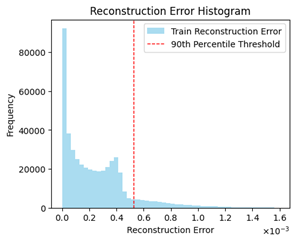
Figure 1. Autoencoder Reconstruction Error
🚀 The Impact: Operational Insights and Reliability
The study provides crucial operational insights into EV battery management by analyzing different scenarios:
- Sensitivity to Charging Methods: The proposed model demonstrated significantly higher anomaly detection sensitivity in fast-charging environments compared to normal charging, providing a critical safety mechanism for rapid-charge infrastructure.
- Complex Anomaly Detection: The model’s sensitivity increased dramatically when multiple anomalies (e.g., voltage drop combined with overheating) occurred simultaneously.
- System-level Reliability: By exploring the effects of battery aging and charging behaviors, this research solidifies the technological foundation required for securing the stable supply trajectory of next-generation mobility services.