Publications: Kim, D., & Moon, H. (2025). The Impact of Mobility as a Service on the Demand for Shared Micromobility in the First-Last Mile and Carbon Reduction. Journal of the Korean Society of Innovation, 20(3).
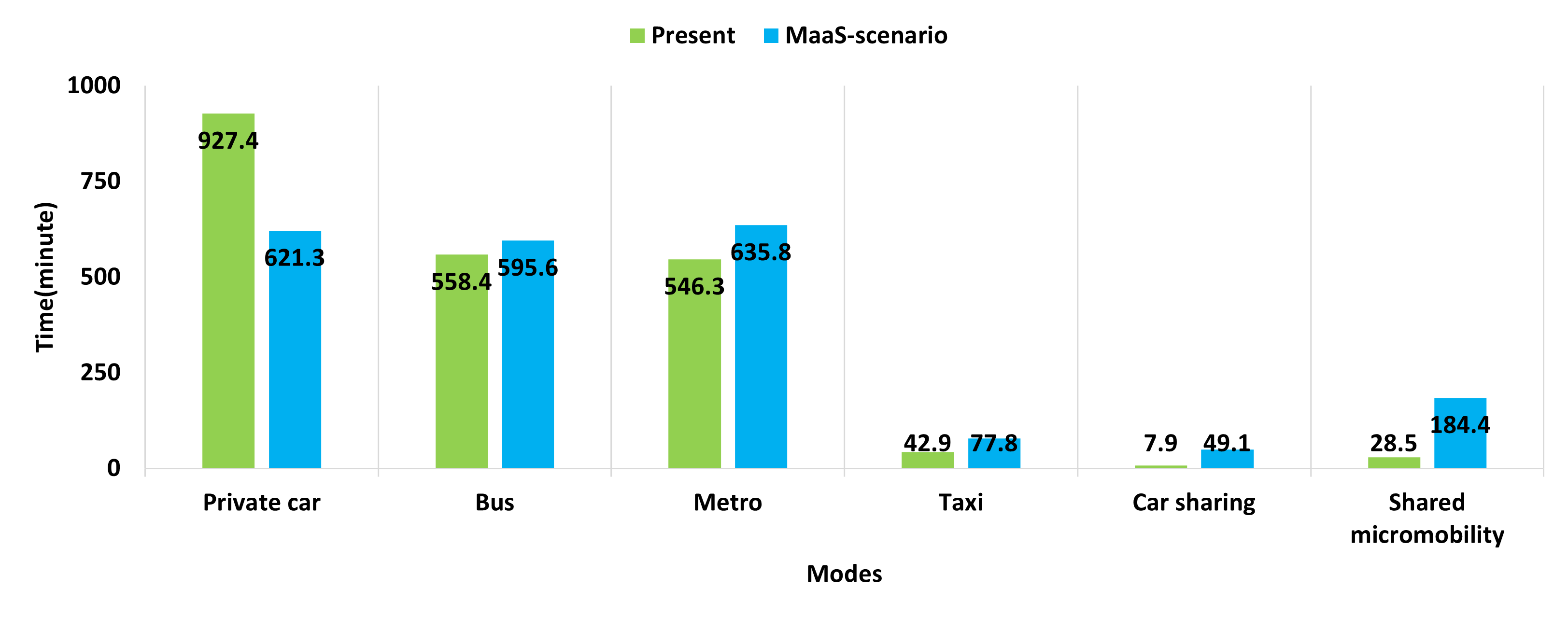
Figure 1. Modal Shift Under MaaS Scenario
📌 The Problem: The First-Last Mile Bottleneck and Emissions
To build sustainable smart cities, resolving the inefficiency of “First-Last Mile” (FLM) trips—the distance between transit stops and final destinations—is critical. While Mobility as a Service (MaaS) is anticipated to promote eco-friendly transport, empirical evidence detailing whether MaaS actually induces a modal shift towards shared micromobility (e-scooters, e-bikes) in FLM segments, and how much it consequently reduces carbon emissions, has been scarce.
⚙️ The Method: Choice Modeling & Latent Clustering
This study deployed a data-driven approach to map consumer mode shift and quantify environmental benefits under a hypothetical MaaS ecosystem.
- Stated Preference (SP) Survey: Conducted targeted surveys among public transit users, presenting them with hypothetical MaaS introduction scenarios.
- Latent Consumer Clustering: Identified hidden consumer segments based on their mobility behaviors and willingness to adopt shared micromobility for FLM trips.
- Multinomial Logit (MNL) Model: Analyzed the specific characteristics of these clusters to predict exact mode choice probabilities.
🚀 The Impact: Quantifying Sustainable Mobility
The analysis revealed distinct behavioral thresholds and substantial environmental economic benefits:
- Target Demographics Identified: Consumers with lower incomes, prior micromobility experience, and highly active lifestyles are statistically the most likely to adopt or increase their use of shared micromobility under a MaaS platform.
- 28.7% Carbon Reduction: The mode shift away from private car usage towards FLM micromobility is estimated to yield a 28.7% reduction in carbon emissions.
- Economic Valuation: When converted using current carbon pricing, this reduction translates to an economic benefit of approximately 5.3 billion KRW annually.
This research provides policymakers and platform operators with robust empirical evidence that integrating shared micromobility into MaaS is a highly effective, quantifiable strategy for enhancing urban transport sustainability.